
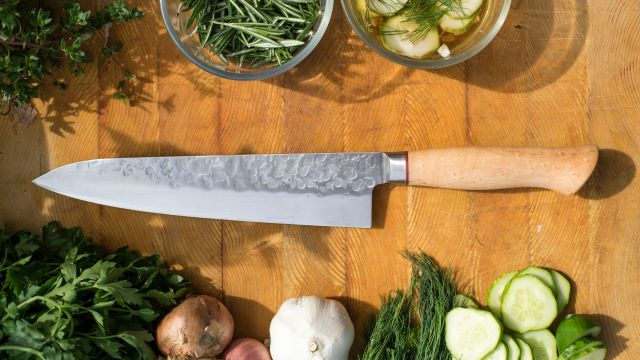
It’s the foundation of every great dish: when you control the blade, you control texture, speed, and presentation. You gain consistency and confidence by learning a few dependable techniques, and your time in the kitchen becomes more efficient and enjoyable.
You should adopt a solid grip and stance. Pinch the blade between thumb and forefinger with the rest of your fingers wrapped around the handle; that pinch grip gives you precision. Stand with feet shoulder-width apart, bring the cutting board close to your body, and use a damp towel underneath to prevent slipping. Your non-dominant hand forms a “claw” to guide ingredients and keep fingertips safe.
You can master a handful of cuts that handle most recipes: slice for even rounds, dice for uniform cubes, mince for small pieces, julienne for thin matchsticks, and chiffonade for delicate herbs. Use a smooth rocking motion with the tip anchored and the heel lifting slightly; this keeps slices even and reduces wrist strain. For harder vegetables, start at the root end and work systematically to maintain stability.
You must keep blades sharp and clean. Hone your knife regularly to realign the edge and sharpen as needed with a whetstone or professional service; a dull knife is more dangerous because it slips. Wash and dry knives immediately after use to prevent corrosion and avoid dishwashers. Select the right knife for the task-a chef’s knife for general work, a paring knife for small tasks, and a serrated knife for bread and tomatoes.
You’ll improve fastest through focused drills: repetitive slices, uniform dice of an onion, and timed practice to build speed without sacrificing control. Organize your workspace with mise en place so you move fluidly from cutting to cooking. When you slice, keep attention on the blade and the food; when you finish, store knives in a block or magnetic strip to protect edges and fingers. With repetition, your knife work becomes second nature and elevates every meal you make.