
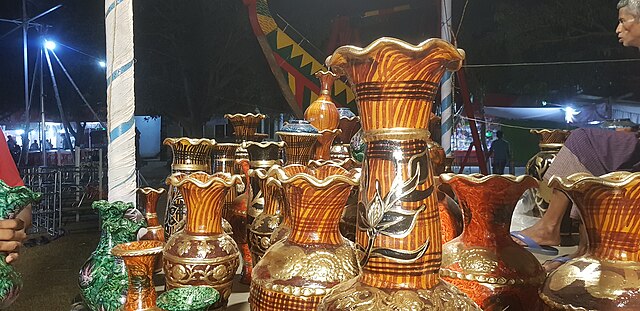
Over centuries, Bangladesh handicrafts have woven a vivid tapestry that reflects rural life, religious practice, and regional identity. Traditional techniques such as Jamdani weaving and Nakshi Kantha embroidery combine delicate skill with stories stitched into fabric. Pottery, terracotta figures, brassware, wood carving, and bamboo and cane products showcase material diversity that local artisans exploit using locally sourced clay, jute, and reed.
Jamdani weaving from Dhaka and Narayanganj produces lightweight, geometric and floral motifs on fine muslin; UNESCO listed Jamdani weaving as intangible cultural heritage. Nakshi Kantha quilts and embroidered panels from Kushtia and surrounding districts display complex narrative motifs stitched by women for dowries, household use, and sale. Tangail sarees remain prized for their iconic ikat and zari work. Jute handicrafts make stylish, eco-friendly bags and home items, while terracotta from rural workshops supplies architectural tiles and decorative objects.
Markets for handicrafts span city bazaars, specialized emporiums, museum shops, and seasonal fairs. New Market and Old Dhaka’s bazaars in the capital remain primary retail hubs where tourists and locals haggle for textiles and metalwork. Sonargaon’s Folk Art Museum and Shilpakala Academy host exhibitions and fairs that connect artisans with buyers and help preserve fading skills. Regional craft centres in Kushtia, Tangail, Sylhet, and Rajshahi serve as production and distribution nodes for their signature products.
Artisans form a large, informal workforce whose skills are transmitted across generations and through communal practice. Female craftworkers contribute heavily to household incomes, especially through embroidery and weaving done at home. Handicrafts play ceremonial roles in weddings and religious festivals and act as everyday utilitarian objects that carry symbolic decoration. Tourism and export demand support livelihoods, while contemporary designers and social enterprises collaborate with artisans to create marketable products without erasing traditional methods.
Preservation of techniques and fair market access determine the future viability of many crafts. Government initiatives, NGOs, and private buyers influence training, quality control, and access to export channels. Consumers who choose handmade Bangladeshi products support cultural continuity, sustainable materials such as jute, and diverse artisan communities across the country.