
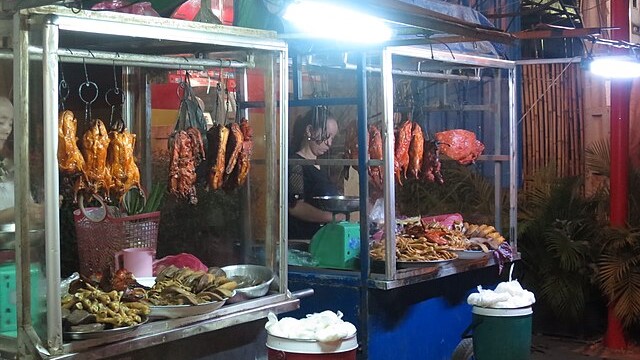
It’s a practical guide to Siem Reap’s top street snacks and safe eating spots, combining vendor recommendations, hygiene tips, and local favorites for confident choices.
Essential Khmer Street Snacks and Local Delicacies
Local stalls present bright, varied bites-fermented salads, grilled skewers and noodle plates-with vendors often prioritizing quick cooking and visible prep to help you eat safely.
Stir-Fried Classics: Lort Cha and Chive Cakes
Lort Cha pairs chewy rice noodles with soy, egg and greens, cooked hot in a wok; chive cakes are pan-fried patties served crisp at busy street carts.
Traditional Staples: Nom Banh Chok and Bamboo Rice
Nom Banh Chok features rice noodles with fish-based green sauce and raw vegetables, commonly eaten at dawn; bamboo rice is sticky, smoky and steamed in banana leaf.
Morning markets serve Nom Banh Chok in clean bowls topped with herbs, bean sprouts and lime; ask vendors about broth turnover and watch noodles prepared to order. Bamboo rice is grilled inside bamboo sections, yielding fragrant, portable parcels best bought from crowded stalls for freshness.
Regional Specialties: Grilled Skewers and Insects
Skewers of marinated pork or fish are grilled over charcoal and sold hot; fried crickets, grasshoppers and even tarantula appear at hip stalls-choose vendors who cook to order.
Street charcoal grills produce smoky, well-seared skewers basted with sweet-salty sauces; insect sellers usually display jars or trays-request fresh frying and avoid pre-exposed bags. Look for vendors with visible heat, clean tongs and queues of locals as signs of turnover and safe preparation.
Primary Locations for Safe and Authentic Dining
The Night Market Hubs and Pub Street Environs
Night markets and Pub Street cluster offer grilled skewers, lok lak and fresh fruit from busy stalls with visible cooking; choose vendors with steady lines and covered displays for safer eating.
Road 60: The Local Gateway to Authentic Flavors
Road 60 remains a local artery where morning markets and small family stalls serve authentic breakfasts, Khmer soups and grilled fish with straightforward prices and clear preparation.
Locals line up for morning kuy teav, bai sach chrouk and grilled river fish along Road 60, where family vendors use charcoal grills and clear basins for ingredients. Watch for steady queues, ask about spice levels, order items cooked to order and carry a bottle of drinking water to sip between bites. Payment is usually cash; choose stalls with visible cooking and packaged condiments to reduce risk.
Strategic Hygiene Practices for Street Food Enthusiasts
Assessing Stall Turnover and Ingredient Freshness
Stalls with steady queues signal high turnover and fresher ingredients; watch cooks replenish supplies, avoid long-sitting seafood or meat, and choose vendors who prepare food to order to limit bacterial buildup.
Managing Safety Risks with Beverages and Raw Produce
Choose bottled or sealed drinks, check ice sources, and skip pre-cut fruit unless prepared in front of you, since unwashed produce and contaminated ice are common contamination routes.
Pack a portable water purifier or rely on bottled water for rinsing produce; ask vendors whether ice and water are from treated supplies, prefer boiled or freshly made beverages, and avoid drinks mixed with untreated ice to reduce gastro illness risk.
Identifying Sanitary Cooking and Storage Standards
Look for clean surfaces, gloves or tongs, covered containers, and separate bins for raw and cooked items; visible handwashing stations and temperature-controlled coolers indicate better handling.
Inspect equipment for regular cleaning: shiny, debris-free pans, sealed refrigeration with visible thermometer readings, and containers labeled by date. Vendors who swap utensils between tasks and display recent-prep signs lower cross-contamination risk; ask short questions about storage times when unsure.
Conclusion
From above, Siem Reap street food offers amok fish, num pang, kuy teav, and skewered meats; eat at busy stalls, night markets, and hygiene-certified vendors, choosing freshly cooked items and bottled water for safe enjoyment.