
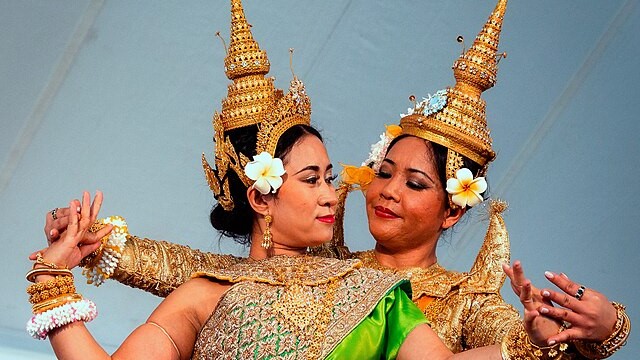
Festivals in Cambodia mark Khmer New Year with Buddhist ceremonies, ancestral offerings, water blessings, traditional games, and communal feasts that preserve cultural identity and seasonal rites.
The Three Days of Choul Chnam Thmey
Choul Chnam Thmey unfolds across three days, each with focused rites: Moha Sangkran ushers in a new household guardian, Veareak Vanabat emphasizes almsgiving and ancestral respect, and Veareak Laeung Sak promotes purification through water and communal cleansing rituals.
Moha Sangkran: Welcoming the New Guardian Angel
Families cleanse shrines, offer incense and food, and receive monkly blessings as the household symbolically accepts a new guardian angel to protect the year ahead.
Veareak Vanabat: Acts of Charity and Ancestral Honor
Communities gather to give alms to monks, distribute aid to the needy, and perform memorial rites at pagodas to honor ancestors and build collective merit.
Offerings are prepared at home and in village halls; rice, robes, and prepared meals are presented to monks in morning almsgiving, while families visit pagodas to chant sutras and pour libations for deceased relatives, linking personal piety with public acts of social care.
Veareak Laeung Sak: Rituals of Purification and Renewal
Temples and households are sprinkled with holy water, Buddha images are bathed, and symbolic cleansing rites remove misfortune and invite renewal for the coming year.
Water-splashing blends solemn blessing and joyful celebration: monks consecrate water with prayers, elders sprinkle it on younger relatives for protection, and playful splashing among neighbors expresses communal renewal; sand stupas, cleaned shrines, and floral offerings complete the purification cycle.
Sacred Rituals and Cultural Observances
Communities gather at pagodas for solemn rites, merit-making, and ancestral homage during Khmer New Year. Elders preside over offerings, chants, and blessings that mark renewal and social cohesion. These observances anchor festive play with spiritual reflection and intergenerational continuity.
Phorn Phnom Ksand: The Significance of Sand Mound Building
Families build Phorn Phnom Ksand-sand stupas at temple grounds-to symbolize accumulated merit and respect for ancestors. Children help shape and decorate the mounds with flags and flowers while offerings and short prayers accompany the ritual.
Sraung Preah: Ceremonial Bathing of Buddha and Elders
Monks lead Sraung Preah by bathing Buddha images with scented water and flowers, followed by younger relatives pouring water over elders’ hands to confer blessings and goodwill for the coming year.
Ritual bathing starts with fragrant water infused with jasmine or rose; devotees gently pour it over gilded Buddha statues while monks chant Pali verses. Devotees then pour water over elders’ hands, exchange respectful gestures, and invoke blessings to cleanse misfortune and invite health, prosperity, and communal harmony.
Traditional Folk Games: Chol Chhoung and Angkunh
Children take part in Chol Chhoung and Angkunh, traditional games that combine physical skill and cooperation, bringing lively competition and shared laughter to New Year festivities.
Players organize Chol Chhoung contests that emphasize teamwork and timing, while Angkunh demands nimble fingers and quick reflexes with small objects or seeds. Local matches draw neighbors together, and elders use these games to teach fair play and pass down seasonal customs to younger generations.
Festive Gastronomy and Symbolic Offerings
Num Ansom: The Traditional Sticky Rice Cakes
Num Ansom, a cylindrical sticky rice cake wrapped in banana leaves, symbolizes prosperity and family unity; fillings like mung bean or banana vary regionally, and making them is a communal New Year ritual.
Kralan: The Art of Bamboo-Roasted Rice
Kralan is glutinous rice mixed with coconut and beans, packed into bamboo tubes and roasted over coals, producing smoky flavor and serving as both snack and offering at New Year gatherings.
Bamboo tubes are filled with soaked glutinous rice, coconut milk, black beans or purple rice, and sometimes palm sugar; sealing the ends with banana leaf or dough traps steam so grains cook with a subtle sweet-smoky aroma. Community members rotate tubes over coals, timing each roast to achieve a tender interior and slightly charred exterior while elders pass down regional recipes and blessing phrases used when presenting Kralan as an offering.
Final Words
Conclusively, Khmer New Year blends ancestral rites, family reunions, merit-making at temples, and spirited public games, sustaining Cambodian identity and marking seasonal renewal through enduring, vibrant ceremonies.