
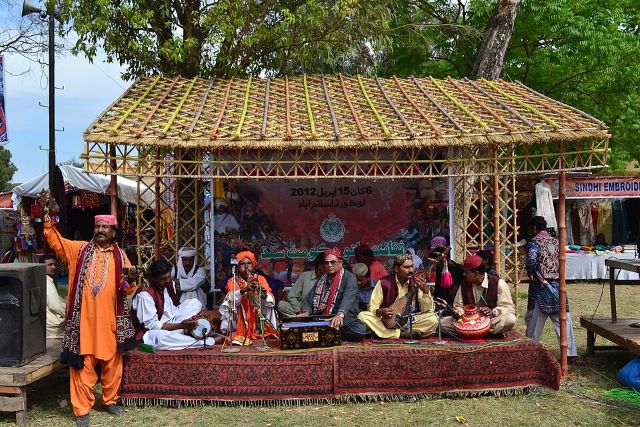
With roots stretching back over a thousand years, Sindhi culture blends Sufi spirituality, artisanal craft, and communal customs that shape daily life across Sindh and its diasporas.
Ajrak serves as a visual emblem of Sindhi identity, a deep indigo and crimson block-printed textile featuring geometric and floral motifs. Artisans apply resist-dyeing techniques using natural dyes, repeated stamping, and meticulous washing to create the multilayered patterns that define authentic Ajrak. Men and women wear Ajrak as shawls, turbans, and ceremonial wraps, and families pass prized pieces down through generations as heirlooms and symbols of respect at weddings and religious gatherings.
Sufi poetry provides the lyrical backbone of Sindhi music, with poets like Shah Abdul Latif Bhittai inspiring devotional songs that explore love, nature, and divine union. Traditional performance often combines vocal lore with call-and-response singing, keeping oral histories alive. Instruments such as the Alghoza (double flute), Yaktaro or Ektara (single-string plucked instrument), tabla, and harmonium anchor ensemble sound, while rhythms shift between meditative sufi qawwali styles and lively folk dances.
Heritage traditions emphasize hospitality, seasonal festivals, and ritual observances. Cheti Chand marks the Sindhi New Year and honors Jhulelal, while urs ceremonies commemorate Sufi saints and draw pilgrims for qawwali, recitation, and communal meals. Wedding customs include intricate embroidery, the use of Ajrak and Sindhi topi (cap), and ritual blessings from elders. Oral storytelling and regional crafts such as ajrakh printing, ralli quilting, and mirror embroidery sustain communal memory and livelihoods.
Contemporary interest in Sindhi culture appears in fashion, art, and cultural programming that reimagines Ajrak and musical forms for new audiences. Museums and cultural centers host workshops on block printing and Sufi music, and younger generations mix traditional motifs with modern design to keep practices relevant. Sustainable craft initiatives and digitized archives support preservation efforts while allowing Sindhi heritage to remain a living tradition rather than a static museum piece.