
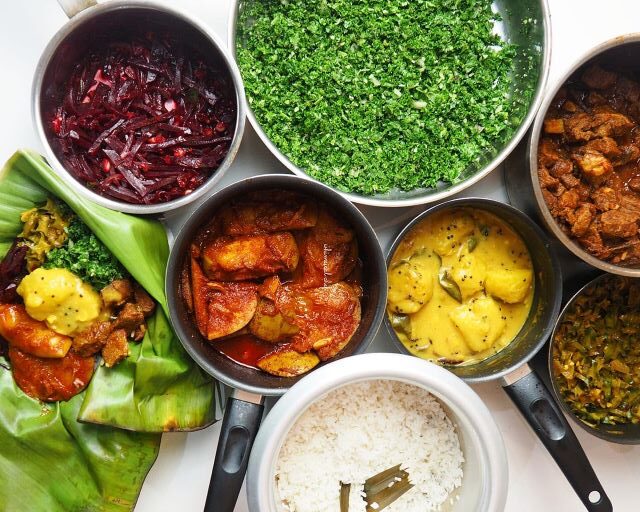
Most Sri Lankans eat rice and curry as a daily staple, a colorful plate of steamed white rice surrounded by several vegetable, fish, meat, and lentil curries plus spicy condiments.
Rice and curry meals typically feature a plain boiled or steamed rice center with multiple small portions of curries that vary by region and season. Curries use coconut milk, curry leaves, fresh pandan, mustard seeds, fenugreek, cumin, coriander, turmeric, and local chili to build layers of flavor. Dhal (parippu) made from red lentils provides a creamy, mildly spiced contrast while fish or chicken curries deliver richer, oilier tastes. Vegetable curries like potato, jackfruit, beetroot, and ash plantain showcase textures and sweetness balanced by heat and acidity.
Sambols and pickles complete the plate; coconut sambol (pol sambol) combines grated coconut, lime, onion, and dried red chili for freshness, while lime or mango pickles add tang and preservation. String hoppers (idiyappam) appear alongside curries for breakfast or dinner and offer a light, steamed rice noodle base that soaks up sauces. Coconut roti and pol sambol form a simple, popular combo for a quicker meal.
Hoppers (appa) arrive as bowl-shaped pancakes made from fermented rice flour and coconut milk, crisp at the edges and soft in the center. Plain hoppers serve as vessels for curries, while egg hoppers crack an egg into the center before cooking for a breakfast favorite. Hopper variations include milk hoppers, sweet jaggery-filled types, and wood-pressed versions in some coastal kitchens. Street stalls and family homes both prepare hoppers on small, rounded pans over high heat to achieve the distinctive texture.
Street food stalls, local restaurants, and hotel buffets showcase regional differences in spice level and ingredient choice. When ordering, ask for less chili if you prefer milder heat, or request vegetarian thalis to try multiple flavors without meat. Eating with the right hand follows traditional etiquette, and sharing several curries on a communal plate offers the best way to appreciate Sri Lanka’s complex, coconut-rich cuisine.