
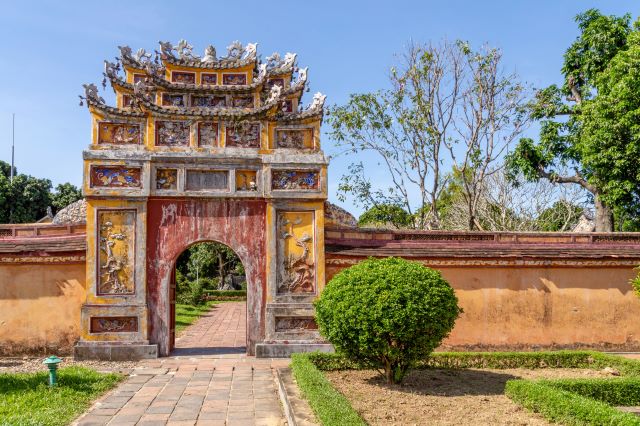
There’s an authoritative overview of the Imperial City, presenting Nguyen dynasty governance, architecture, court rituals, and conservation efforts, with practical visitor insights on palaces, gates, tombs, and archival displays.
The Nguyen Dynasty: Architects of Unified Vietnam
Nguyen rule unified Vietnam in 1802, founding institutions, monumental architecture and Confucian court rituals centered in Hue, shaping national identity and administrative order that persisted through colonial encounters and the Imperial City’s symbolic authority.
From Lords to Emperors: The Rise of Gia Long
Gia Long secured the throne through military skill and foreign assistance, converting regional lordship into centralized monarchy and establishing Hue as the ceremonial and political capital.
Administrative Reforms and the Mandate of Heaven
Centralization reorganized provinces, standardized taxation, expanded the mandarinate and codified laws to assert imperial legitimacy under the Mandate of Heaven.
Imperial reforms included land and population surveys, clearer provincial hierarchies, strengthened prefectural oversight and a state-directed examination system; the Gia Long legal code combined Confucian norms with administrative rules to centralize authority and legitimize succession through ritual and historiography.
The Imperial City: Architectural Grandeur of the Citadel
Imperial walls showcase layered symmetry, ornate rooflines, and color-coded spaces reflecting Nguyen ceremonial order.
Sacred Geometry: Feng Shui and the Three Enclosures
Alignment with feng shui principles structured the citadel into three concentric enclosures, guiding palace placement and ritual movement.
Iconic Landmarks: The Noon Gate and Thai Hoa Palace
Noon Gate served as the main ceremonial entrance while the Thai Hoa Palace hosted imperial audiences beneath a gilded roof and dragon motifs.
Visitors encounter the triple-arched Noon Gate, flanked by guard towers and stelae; beyond it, Thai Hoa Palace’s raised dais, carved lacquered panels and a nine-dragon frieze framed state rituals, reflecting cosmic order and imperial authority.
The Royal Tombs: Eternal Palaces of the Emperors
Tombs of the Nguyen emperors merge imperial ceremony, axial layouts and sculpted gateways, where pavilions, courtyards and painted murals stage dynastic memory and ritual continuity alongside carefully managed ceremonial approaches.
Artistic Evolution from Minh Mang to Khai Dinh
Minh Mang emphasized Confucian order, restrained ornament and porcelain detail, while Khai Dinh favored exuberant mosaics, reinforced concrete reliefs and a cosmopolitan fusion that redefined funerary aesthetics.
Landscape Integration along the Perfume River
Banks of the Perfume River frame tombs with terraces, reflective pools and axial views, guiding processional sightlines and reinforcing symbolic links between water, topography and imperial afterlife rituals.
Architects sited tomb complexes to harness river reflections, hill backdrops and seasonal light, arranging bridges, causeways and groves to choreograph arrival. Stone terraces, axial promenades and plantings follow feng shui logic, while water features control microclimate and sightlines, producing composed vistas that tie funerary architecture into Hue’s living spatial order.
Intangible Cultural Heritage: Court Music and Rites
Nha Nhac: The UNESCO-Recognized Soul of the Court
Nha Nhac, UNESCO-listed, preserves imperial court music through layered melodies, ritual choreography, and lacquered instruments once performed at coronations and state ceremonies.
Royal Festivals and the Preservation of Ancestral Rituals
Festivals reanimate ancestral rites with processions, offerings, and court protocols preserved by temple custodians and community practitioners.
Communities maintain royal festivals such as the Nam Giao earth-offering and Imperial Ancestral Worship, replicating court protocols, costumes, and ritual music on lunar-calendar dates. Temple custodians, artisans, and Nha Nhac ensembles collaborate in training programs and archival projects to transmit choreography, instrument craft, and liturgical texts to younger generations.
The Culinary Legacy: Artistry of Hue Imperial Cuisine
Courtly kitchens refined flavor, presentation, and ritual to suit imperial taste, blending delicate herbs, precise techniques, and seasonal produce into memorable dishes reserved for royal banquets.
Philosophy of Balance in Royal Banquet Preparation
Chefs balanced yin and yang through texture, temperature, and color, composing sequences that honored etiquette while highlighting natural ingredients in restrained, ceremonial courses.
Street Food Origins and the Refinement of Local Flavors
Vendors adapted palace techniques to affordable formats, refining flavors with local fish sauce, herbs, and slow-simmered broths that became Hue’s signature street offerings.
Local markets and rivers supplied specialty ingredients-mackerel, shrimp, coconut milk, and aromatic herbs-while cooks preserved imperial methods, simplifying steps for speed without sacrificing depth. This adaptation produced iconic bowls and snacks, where careful broth-building and precise seasoning translate regal complexity into accessible, everyday plates. Today these stalls serve as living links between court cuisine and contemporary taste.
Restoration and Preservation of the Heritage Complex
Conservation efforts have prioritized original materials, structural repair, and archival research, restoring imperial halls while honoring traditional craftsmanship and historic authenticity.
Post-War Reconstruction and International Collaboration
Reconstruction after wartime damage combined Vietnamese expertise with UNESCO and international teams to rebuild gates, roofs, and murals using documented techniques and shared funding.
Navigating Modern Tourism and Site Sustainability
Tourism pressures prompt controlled visitor flows, timed entry, and educational programs to protect fragile structures while sustaining community benefits.
Management plans now integrate conservation science, local stakeholder input, revenue reinvestment, and targeted infrastructure upgrades; ongoing monitoring, visitor caps, and trained guides minimize wear, maintain authenticity, and support livelihoods around the complex.
Final Words
Drawing together the Hue Heritage Guide presents the Imperial City and Nguyen history with precise scholarship, clear maps, and curated narratives that contextualize architecture, ceremonial life, and administrative systems for scholars, students, and informed visitors seeking concise, reliable reference.