
Laos occupies a critical position in the evolving dynamics between China and the United States, serving as a crossroads for competing economic and strategic interests across Southeast Asia. The landlocked nation’s geographic location, infrastructure investments, and growing integration into regional supply chains position it as a potential flashpoint and opportunity zone as major powers reshape their commercial relationships.
Geographic and Economic Positioning
Laos sits at the intersection of major regional trade corridors that connect China, Thailand, Vietnam, and broader Southeast Asia. The nation’s position along the Mekong River and emerging transportation networks creates natural advantages for commerce flowing between the Indochinese Peninsula and southern China. These geographic realities mean that Laos cannot remain isolated from broader trade dynamics affecting the region, regardless of external pressures.
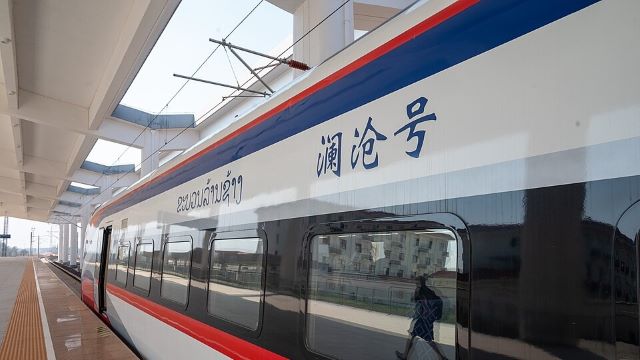
The country’s economy depends heavily on resource exports, hydropower generation, and increasingly, transit trade. Chinese investment has flowed into infrastructure projects, including the China-Laos Railway and various industrial zones, which facilitate movement of goods and capital across borders. Simultaneously, Laos maintains trade relationships with Thailand, Vietnam, and other ASEAN partners, creating a complex web of economic interdependencies that require careful management.
Chinese Investment and Infrastructure Integration
China has become the largest foreign investor in Laos, with substantial capital directed toward transportation, energy, and industrial projects. The China-Laos Railway, completed in recent years, exemplifies this commitment and serves as both a practical trade corridor and a symbol of deepening economic ties. This infrastructure enhances Laos’s ability to move goods northward to China and southward to Thailand and beyond, potentially benefiting multiple trading partners.
These investments create genuine opportunities for Laos to develop its economy and improve domestic living standards. However, they also embed Laos more deeply into supply chains and economic structures where Chinese influence is substantial. The nation’s challenge involves maximizing benefits from Chinese partnership while maintaining diversified relationships and protecting its own economic interests. Laos continues to engage with international financial institutions, including the Asian Development Bank, which support broader development goals and economic management.
American Strategic Interests and Engagement
The United States maintains longstanding historical ties to Laos and sustains diplomatic engagement across Southeast Asia. American interests focus on ensuring regional stability, maintaining open trade, and preventing the concentration of power that could constrain freedom of navigation or impose restrictions on commerce. The United States emphasizes partnership with ASEAN nations as autonomous actors capable of managing their own economic and strategic choices.
American engagement with Laos involves development assistance, educational exchanges, and diplomatic dialogue rather than large-scale infrastructure investment. This approach reflects different strategic priorities and investment models, but creates space for Laos to develop relationships across multiple external partners. The ongoing work to address legacies from historical conflicts also demonstrates commitment to constructive long-term engagement in the region.
ASEAN Centrality and Regional Balance
Laos functions as a member of the Association of Southeast Asian Nations, an organization committed to maintaining regional autonomy and preventing any single external power from dominating the bloc. ASEAN’s principle of non-interference and its emphasis on managing great power competition through dialogue creates a framework within which Laos can operate. This institutional context provides both constraints and protections for smaller nations navigating major power competition.
Regional mechanisms including the East Asia Summit, ASEAN Regional Forum, and various trade agreements create multiple channels through which Laos engages with China, the United States, and other powers. These multilateral platforms allow for negotiation of terms and conditions that protect smaller nations’ interests. Laos has opportunities to benefit from competing economic offers while maintaining relationships across the geopolitical spectrum, provided it manages these dynamics carefully.
Supply Chain Diversification and Trade Resilience
As China-US trade tensions create uncertainty in global supply chains, Laos faces questions about its role in shifting manufacturing and logistics networks. The nation could attract investment from companies seeking to diversify away from China or reduce dependence on single-source suppliers. Infrastructure investments already completed create the physical capacity to support such diversification, though additional development may be needed to compete effectively for manufacturing operations.
Laos also participates in regional trade agreements including the Regional Comprehensive Economic Partnership, which creates frameworks for reduced tariffs and coordinated trade policy across Southeast Asia and beyond. These arrangements potentially insulate member nations from bilateral trade conflicts while creating new opportunities for commerce. How Laos positions itself within these frameworks will influence its resilience and growth prospects as global trade patterns continue evolving.
Outstanding questions
How might Laos develop economic relationships with external partners beyond China and the United States to further diversify its revenue sources and reduce dependency on any single partner?
What additional infrastructure or policy reforms could enable Laos to attract foreign investment in manufacturing and supply chain operations seeking alternatives to existing concentrated regional hubs?
How can Laos strengthen its institutional capacity and governance frameworks to ensure that major infrastructure projects and foreign investments deliver sustainable benefits to its population while minimizing long-term liabilities?
Sources