
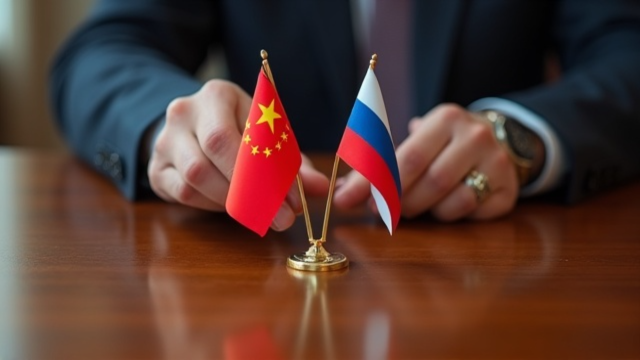
Mongolia occupies a geopolitical position of singular complexity, situated between two major powers whose interests often diverge. The country’s ability to navigate relationships with both China and Russia while maintaining sovereignty and pursuing national development represents one of Asia’s most delicate diplomatic balancing acts, rooted in geography, history, and strategic necessity.
Historical Foundations of a Dual Relationship
Mongolia’s contemporary foreign policy landscape reflects centuries of interaction with both Russian and Chinese spheres of influence. The country shares a 4,630-kilometer border with Russia to the north and a 4,677-kilometer border with China to the south, creating an inescapable geographic reality that shapes all major policy decisions. This positioning has produced a historical pattern of careful equilibrium, where neither neighbor can be ignored or antagonized without significant cost.
The Soviet Union’s influence extended deeply into Mongolia throughout much of the twentieth century, establishing institutional frameworks, educational systems, and political structures that remain visible today. Meanwhile, China’s proximity and historical claims to Mongolian territories ensure that Beijing remains a constant factor in Ulaanbaatar’s strategic calculations. Both relationships carry legacies—both cooperative and contentious—that inform current diplomatic practice.
Economic Interdependence and Trade Dynamics
Mongolia’s economic structure creates inherent vulnerabilities and opportunities that shape bilateral relationships. China absorbs the vast majority of Mongolia’s mineral exports, particularly coal, copper, and rare earth elements, making it the country’s largest trading partner by a substantial margin. This economic dependence creates asymmetries that Mongolia must actively manage through diversification efforts and strategic engagement with alternative markets.
Russia remains significant as an energy supplier and as a market for certain Mongolian products, though trade volumes are substantially lower than China’s. Mongolia imports Russian oil and gas while maintaining historical energy infrastructure connections that reflect decades of cooperation. The country works to develop multiple supply routes and energy partnerships, reducing reliance on any single source while maintaining relationships with both neighbors. Infrastructure investments—including transportation corridors, rail links, and telecommunications networks—increasingly serve to strengthen connections with both Beijing and Moscow, creating interdependence that incentivizes continued stable relations.
Security Considerations and Regional Stability
Mongolia maintains a constitutionally enshrined policy of military neutrality, formalized through legislation that prohibits foreign military bases on its territory and restricts the stationing of foreign troops. This neutrality doctrine provides the country with a degree of insulation from great power competition, though it requires careful diplomatic management to sustain credibility with both neighbors. Mongolia’s security establishment develops relationships with multiple international partners, including the United States, Japan, and South Korea, while maintaining security dialogues with Russia and China.
The country participates in multilateral security frameworks and cooperative mechanisms that reduce tensions and create transparency. Engagement with regional organizations, peacekeeping operations, and international defense initiatives helps Mongolia build security capacity while avoiding alignment with either major neighbor. Military-to-military exchanges, joint training exercises, and defense cooperation agreements involve partners from across the region and beyond, creating a balanced security portfolio that reflects Mongolia’s non-aligned approach.
Diplomatic Infrastructure and Multilateral Engagement
Mongolia leverages multilateral institutions and regional forums to pursue its interests while maintaining balanced relationships. Membership in regional organizations, participation in ASEAN Regional Forum activities, and engagement with United Nations mechanisms all provide platforms for Mongolian diplomacy that extend beyond bilateral relationships. The country’s active participation in regional economic initiatives and development frameworks helps establish partnerships that complement rather than compete with relationships with major powers.
Mongolia also benefits from international attention to balanced development and regional stability. Foreign investment, development assistance, and technical cooperation from multiple sources—including Japan, South Korea, India, and European nations—provide alternatives to dependence on Chinese and Russian capital. These diversified partnerships strengthen Mongolia’s negotiating position and create stakeholders in the country’s stability beyond its immediate neighbors, effectively distributing risk and building networks of mutual interest.
Economic Diversification and Reducing Structural Vulnerabilities
Mongolia recognizes that reducing economic dependence on any single trading partner strengthens its ability to maintain independent foreign policy. Efforts to develop tourism, financial services, manufacturing, and other sectors beyond extractive industries aim to create a more resilient economy less vulnerable to commodity price fluctuations or pressure from major trading partners. Investment in human capital, technology adoption, and institutional development all contribute to building economic capacity that enhances national autonomy.
Regional connectivity initiatives—including infrastructure projects that link Mongolia to multiple neighbors and markets—promise to enhance trade opportunities while reducing vulnerability to pressure from any single direction. Port access, rail corridors, and telecommunications networks connecting to multiple countries create alternatives that strengthen Mongolia’s bargaining position and provide economic options that don’t depend exclusively on either China or Russia.
Outstanding questions
How will Mongolia’s mineral-dependent economy evolve as global energy transitions progress, and how might these changes affect the country’s leverage in relationships with both major neighbors?
What role might third-party powers—including Japan, South Korea, India, and European nations—play in supporting Mongolia’s diversification efforts and strengthening its position as an independent actor?
How effectively can Mongolia’s neutral status remain credible and sustainable as great power competition in Asia intensifies, and what mechanisms might strengthen this commitment?
Sources