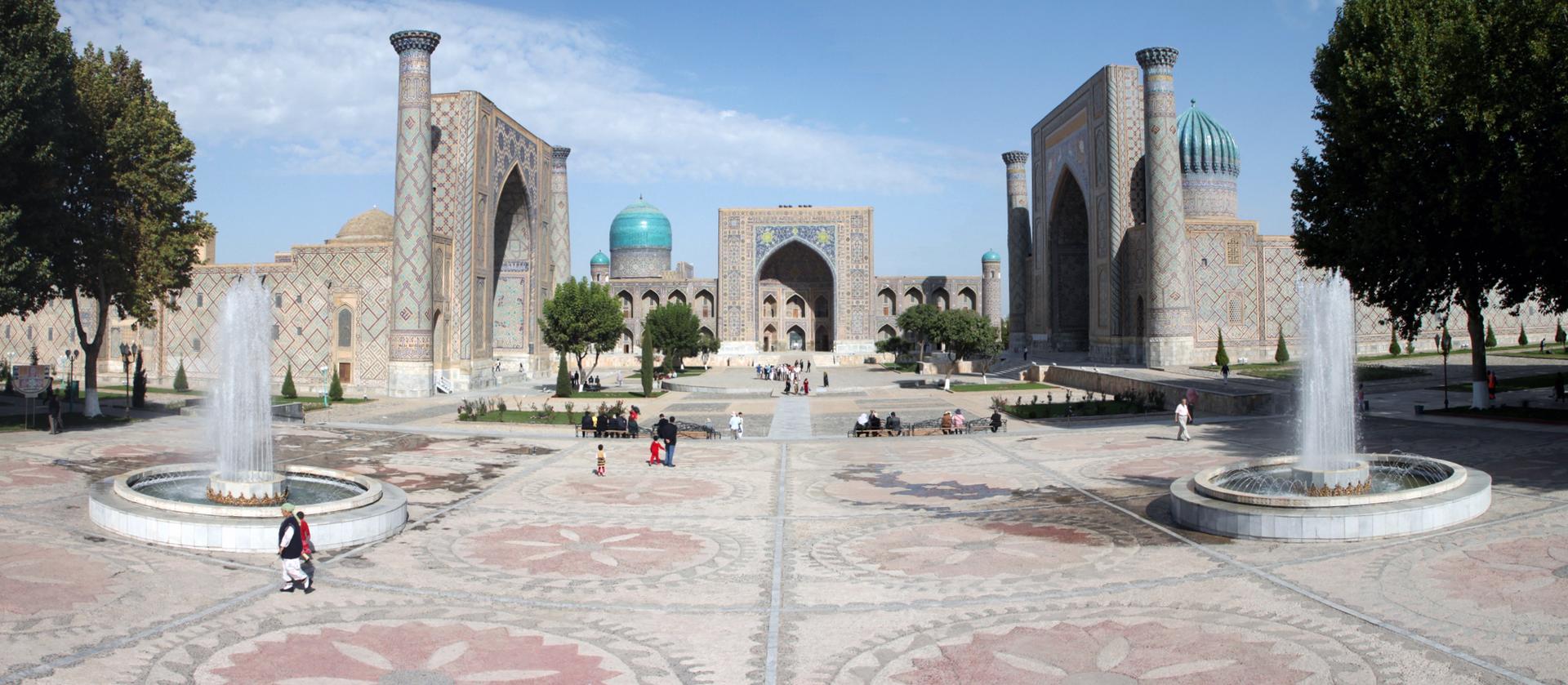
Samarkand, the UNESCO-listed Uzbek city whose Registan square has anchored Silk Road trade for centuries, is absorbing a surge in visitor numbers that is testing the limits of heritage management and urban planning. According to the city's "Silk Road" International University of Tourism and Cultural Heritage, approximately 1.2 million tourists visited all of Uzbekistan in 2016; by 2025 that figure had grown to nearly 12 million. Samarkand alone received an estimated seven million visitors last year, more than 10 million arrived in the first nine months of 2026, and the city expects around 14 million by year's end.
The university — whose rector, Professor Muhsinjon Kholmukhamedov, spoke to UN News — is at the centre of efforts to manage that pressure. It became the first partner university of UN Tourism in 2023 and renewed that partnership this year. Among the initiatives under way, the institution is translating courses from UN Tourism's online academy for local residents and preparing to open the first INSTO tourism observatory in Central Asia. The observatory is intended to track not only visitor numbers but tourism's effects on employment, the urban environment and residents' daily lives, in the manner of similar observatories operating in Barcelona, Vienna, Gifu in Japan and Nuevo León in Mexico.
Heritage conservation poses its own challenges. Kholmukhamedov said restoration work carried out in the 1990s used gypsum, concrete and rebar, materials now considered damaging to historic structures. Researchers are developing evidence-based recommendations on modern composite materials, while laser scanning is being used to build three-dimensional models of buildings and detect structural deformations. "If there is a critical tilt, we try to support the structure," the rector said.
Infrastructure expansion is also accelerating. New railways are expected to connect Uzbekistan with China and Afghanistan, and onward to South Asia, while a planned high-speed highway is projected to cut the Samarkand–Tashkent journey to about two and a half hours. Both are due for completion between 2030 and 2032. Direct flights from Samarkand now serve more than 40 destinations.
More than 1,100 apartment buildings have been constructed in Samarkand Region over the past eight years. UN-Habitat is now working with the national government to develop the Samarkand Housing Profile, described as Uzbekistan's first, a process that aligns with this year's World Cities Day theme of affordable housing. The city's master plan extends to 2040.
Sabine Machl, UN Resident Coordinator in Uzbekistan, said Samarkand's growth had made it "vibrant and culturally rich." Uzbek palov culture, including Samarkand's layered rice pilaf prepared with local sesame oil, holds a place on UNESCO's Intangible Cultural Heritage list.
This article is based on a primary source and has undergone editorial review prior to publication.


